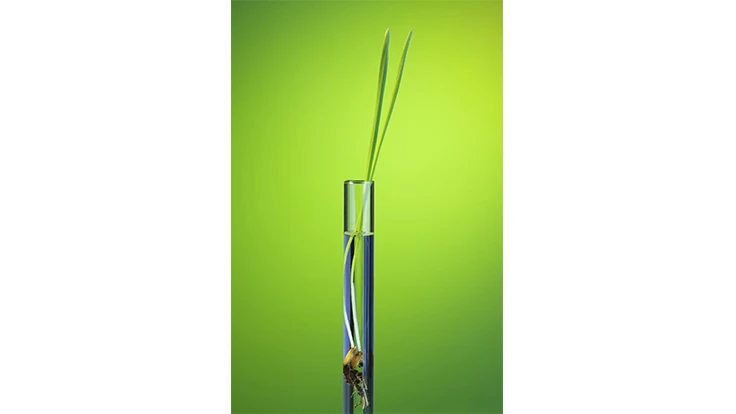
Soil testing is a logical way to monitor potassium levels, but a strategy that works best for getting the best handle on potassium in the turfgrass is regular tissue testing.
Dr. Michael Goatley, Turfgrass Extension Specialist/Professor of Crop and Soil Environmental Sciences at Virginia Tech University, calls tissue testing “a snapshot in time of nutrient levels in the plant and it is necessary to pair the information with that of a soil test.”
Since potassium is mobile throughout the soil profile, Goatley says tissue testing on sand-based soils is about the only way to really monitor what is going on inside turf with regard to potassium nutrition.
“I usually think of potassium much like I do lime… if it is needed, it should be applied,” he says. “The only way to really know if you need it is to soil and/or tissue test.”
In particular, Goatley believes it is important to assess potassium levels prior to the logical stress periods of summer or winter. Think of potassium as the “anti-freeze” or “coolant” of the plant world, he says, adding superintendents need to have adequate amounts in their turfgrass tissues before a stress period arrives.
Latest from Golf Course Industry
- From the publisher’s pen: Conscientious of a bigger role
- Bernhard and Company partners with Laguna Golf Phuket
- Terre Blanche showcases environmental stewardship
- VIDEO: Introducing our December issue
- Bernhard and Company introduces Soil Scout
- Nu-Pipe donates to GCSAA Foundation’s Centennial Campaign
- GCSAA enhances golf course BMP tool
- Melrose leadership programs sending 18 to 2026 GCSAA Conference and Trade Show


